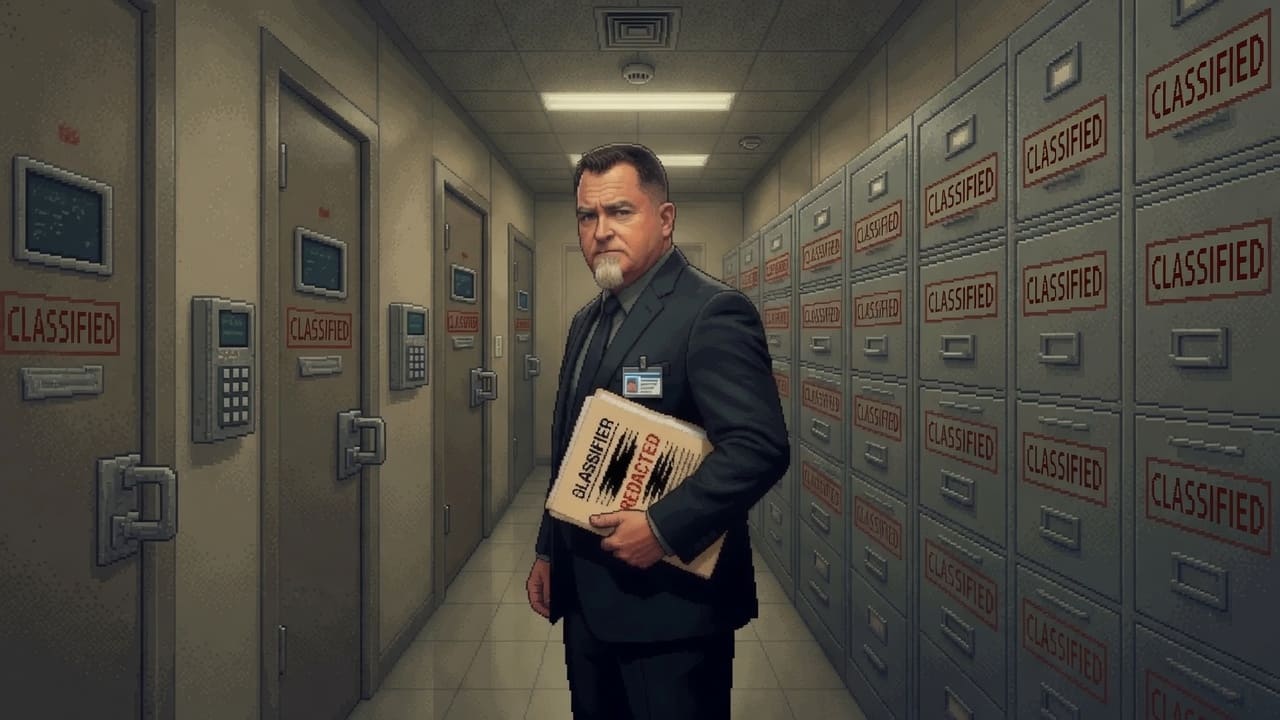
Luis Elizondo served as a U.S. Army counterintelligence specialist and later as a civilian intelligence officer in the Department of Defense. He worked in the Office of the Under Secretary of Defense for Intelligence from 2008 until his resignation in October 2017.
Elizondo claims he directed AATIP, a program examining unidentified aerial phenomena reported by military personnel. He went public after resigning, citing internal resistance, and provided videos and descriptions of UAP performance characteristics to journalists and lawmakers.
- Enlisted in the U.S. Army in 1995; later served as civilian intelligence officer with deployments to Afghanistan and Guantanamo Bay.
- Joined the Office of the Under Secretary of Defense for Intelligence in 2008; claims senior role in AATIP from around 2010.
- Resigned October 2017; assisted New York Times with AATIP reporting and release of three Navy videos in December 2017.
- Described UAP 'five observables' in interviews: instantaneous acceleration, hypersonic velocity, low observability, trans-medium travel, and positive lift.
- Authored 2024 memoir 'Imminent'; testified before Congress on UAP encounters.
- United StatesBorn and raised
- United States ArmyEnlisted 1995, Military Intelligence
- Department of DefenseCivilian intelligence officer 1998–2017
- Office of the Under Secretary of Defense for IntelligenceStaff 2008–2017
- Advanced Aerospace Threat Identification ProgramSenior role claimed 2010–2017
- To The Stars Academy of Arts and SciencesDirector of Global Security post-2017
Background
Luis Elizondo was born in Texas and raised in South Florida. He graduated from the University of Miami with a degree in microbiology and immunology. Elizondo enlisted in the U.S. Army in 1995 and trained in military intelligence. His early service included postings in South Korea and Kuwait.
After transitioning to civilian intelligence work around 1998, Elizondo conducted operations across Latin America, the Caribbean, and the Middle East. He served in Afghanistan following the September 11 attacks, coordinating counterintelligence efforts. Elizondo also worked at the Guantanamo Bay detention facility.
In the mid-2000s, Elizondo held roles overseeing counterespionage and counterterrorism investigations from Washington, D.C. He served briefly at the Office of the National Counterintelligence Executive and the Office of the Director of National Intelligence. These assignments involved sensitive national security programs.
Elizondo joined the Office of the Under Secretary of Defense for Intelligence at the Pentagon in 2008. He managed aspects of special access programs and information sharing. Around 2010, he took on responsibilities related to the Advanced Aerospace Threat Identification Program, which examined military reports of unidentified objects.
AATIP analyzed cases such as the 2004 USS Nimitz encounter. Elizondo has stated the program documented recurring performance traits in credible reports. Pentagon statements have disputed the extent of his formal responsibilities for the program during this period.
In October 2017, Elizondo submitted his resignation letter to Secretary of Defense James Mattis. He cited bureaucratic obstacles and a lack of priority on UAP matters. Shortly afterward, he collaborated with journalists on a New York Times article that detailed AATIP and published three declassified Navy videos.
Elizondo joined To The Stars Academy after leaving government service. He appeared in media interviews describing UAP characteristics and national security implications. He later left that organization and focused on writing and public advocacy.
In 2021, Elizondo filed a complaint with the Department of Defense Inspector General alleging reprisal related to his disclosures. His 2024 memoir detailed his career and UAP observations. He has continued public commentary through interviews and congressional appearances.
Elizondo maintains he acted to bring attention to potential aerospace threats. Supporters including former Senator Harry Reid have affirmed his involvement in the topic. Critics have questioned aspects of his account of program leadership.
Throughout his career, Elizondo held security clearances and worked on counterintelligence protecting U.S. technology. His scientific education informed his approach to analyzing reported phenomena. He has emphasized the need for systematic data collection on UAP incidents.
Where They Are Now
As of October 2026, Luis Elizondo remains active in UAP-related discussions. He participates in media appearances, podcast updates, and has been referenced in connection with recent congressional hearings on the topic.
Elizondo has described ongoing behind-the-scenes work in Washington on disclosure matters while continuing as an author and commentator.
Last updated 25 October 2026