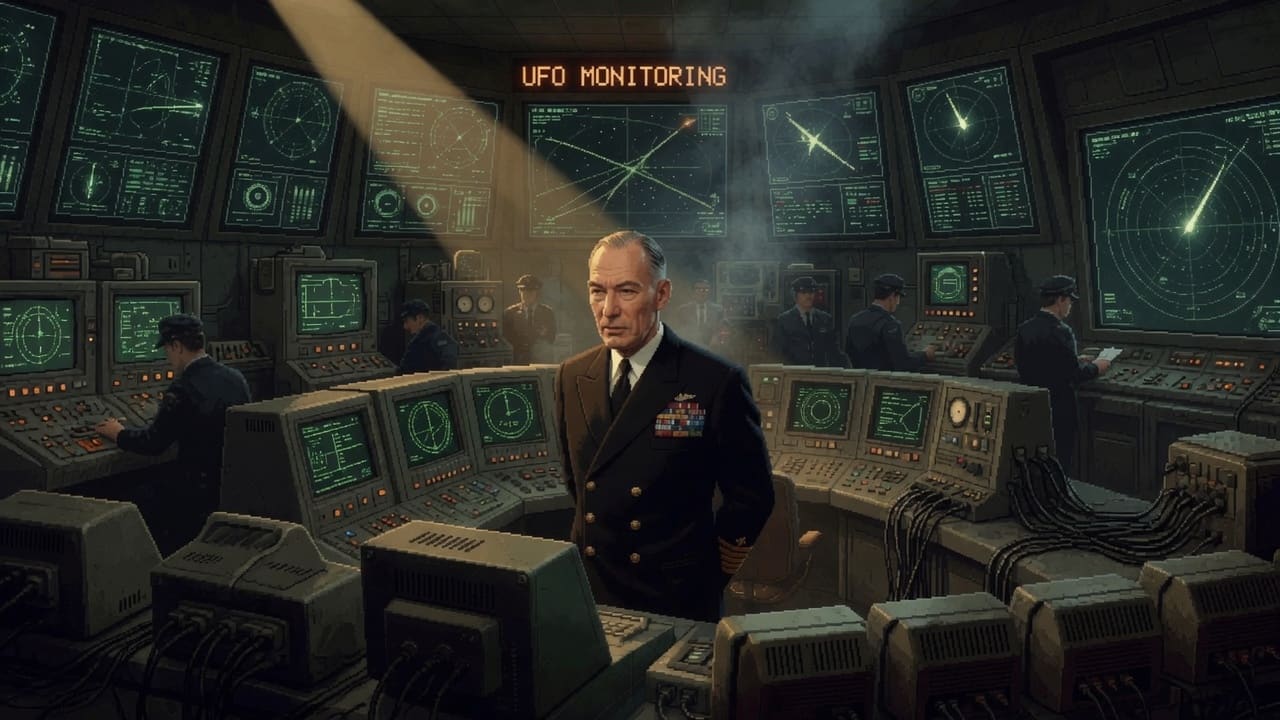
Roscoe Henry Hillenkoetter was a U.S. Navy vice admiral and the first Director of Central Intelligence, heading the Central Intelligence Group and then the CIA from May 1947 to October 1950.
After retiring from the Navy in 1957 he joined the board of the National Investigations Committee on Aerial Phenomena and in 1960 publicly urged congressional hearings on UFOs, stating that senior Air Force officers took the reports seriously despite official policy.
- Graduated U.S. Naval Academy 1919; served in naval intelligence from 1933 including attaché posts in France.
- Executive officer of USS West Virginia at Pearl Harbor attack; later intelligence officer on Adm. Nimitz Pacific Fleet staff.
- Director of Central Intelligence 1947–1950 under President Truman.
- Retired as Vice Admiral May 1957 after commanding Cruiser Division 1 in Korean War and serving as Navy Inspector General.
- NICAP board member 1957–1962; February 1960 letter to Congress reported in New York Times on Air Force UFO concerns.
- United StatesBorn and served
- United States NavyVice Admiral, 1915–1957
- Central Intelligence AgencyFirst Director, 1947–1950
- National Investigations Committee on Aerial PhenomenaBoard member 1957–1962
- USS West VirginiaExecutive officer at Pearl Harbor
- USS MissouriCommanding officer 1946
Background
Roscoe Henry Hillenkoetter was born May 8, 1897, in St. Louis, Missouri. He graduated from the United States Naval Academy at Annapolis in 1919 as part of the class of 1920. He served with the Atlantic Fleet during World War I before entering naval intelligence duties. Early assignments included tours as assistant naval attaché in France, Spain, and Portugal beginning in 1933. These roles built expertise in foreign intelligence collection that shaped his later career.
During World War II Hillenkoetter served as executive officer of the battleship USS West Virginia and was wounded in the December 7, 1941, attack on Pearl Harbor. He survived the sinking and was subsequently assigned as officer in charge of intelligence on the staff of Adm. Chester W. Nimitz in the Pacific Fleet. He held that post from September 1942 until March 1943. Additional wartime service included command and staff positions that advanced his rank to rear admiral by late 1946.
In 1946 Hillenkoetter commanded the battleship USS Missouri. President Truman then selected the reluctant rear admiral to lead the new Central Intelligence Group in May 1947. He became the first Director of Central Intelligence after the National Security Act created the CIA in September 1947. Hillenkoetter served in that post until October 1950, overseeing the agency’s early organization and operations during the start of the Cold War.
After leaving the CIA, Hillenkoetter returned to sea duty. He commanded Cruiser Division 1 in the Pacific Fleet during the Korean War from 1950 to 1951. Subsequent commands included leadership of the Third Naval District. He was promoted to vice admiral on April 9, 1956, and served as Inspector General of the Navy from August 1956 until his retirement on May 1, 1957.
In retirement Hillenkoetter accepted a position on the board of governors of the National Investigations Committee on Aerial Phenomena, serving from 1957 until February 1962. NICAP, founded in 1956, advocated for open scientific investigation of unidentified flying objects. Hillenkoetter’s classmate from the Naval Academy, Donald Keyhoe, directed the group and credited the admiral with supporting public disclosure of UFO evidence.
On February 27, 1960, Hillenkoetter issued a statement that was reported the next day in The New York Times. He wrote that behind the scenes high-ranking Air Force officers were soberly concerned about UFOs. He added that official secrecy and ridicule led many citizens to believe the objects were nonsense and urged immediate congressional action to reduce dangers from continued secrecy. The statement accompanied NICAP materials sent to Congress.
Hillenkoetter’s 1960 remarks received national press coverage and were entered into the Congressional Record. They represented one of the highest-ranking former intelligence officials publicly questioning UFO secrecy at the time. He resigned from the NICAP board in early 1962. Sources indicate he later engaged in private business in New Jersey.
Hillenkoetter died of emphysema on June 18, 1982, at Mount Sinai Hospital in New York City at age 85. He was buried at Arlington National Cemetery. His career spanned naval intelligence, wartime commands, and the founding leadership of the CIA before his brief but notable public role on UFO matters.
Legacy
Hillenkoetter died June 18, 1982, in New York City and is buried at Arlington National Cemetery. His 1960 statement remains one of the most cited public remarks by a former Director of Central Intelligence on the UFO topic.
Last updated 25 October 2026